
Why does my baby have a big tongue?
Macroglossia (enlarged tongue)
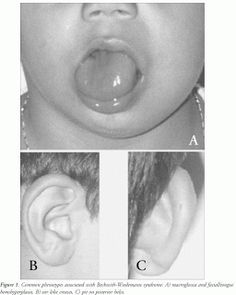
Beckwith-Wiedemann syndrome (BWS)
is an overgrowth disorder with a predisposition to neoplasms. Most patients have a sporadic or inherited alteration of chromosome 11p15, which includes genes that encode insulin-like growth factor 2. At birth, classic physical findings include macrosomia, macroglossia (enlarged tongue), hemi hyperplasia, and medial abdominal wall defects (umbilical hernia, omphalocele). Some infants also have visceromegaly. Newborns must be monitored closely for hypoglycemia because fetal hyperinsulinemia can result in profoundly low blood glucose at birth. Patients with BWS are also at significantly increased risk of embryonal tumors such as Wilms tumor and hepatoblastoma. Abdominal ultrasound and alpha-fetoprotein level testing should occur every 3 months from birth to age 4 and renal ultrasound every 3 months from age 4-8. Patients with isolated hemi hyperplasia are also at increased risk for Wilms tumor and hepatoblastoma and should undergo frequent screening as in those with BWS
ALMOES BLOG